
Windsurfing Trip to Gotland
Mission failed or mission accomplished? Flo and Valerie Luther recount a wonderful windsurfing trip that didn't quite live up to all their dreams and expectations.
We all know them—the countless travelogues in online and print magazines about amazing trips by windsurfers obsessed with chasing down special waves or storm systems around the globe. They stay etched in our minds with fascinating images of epic days in unbelievable conditions and creative stories, mostly about crazy journeys involving countless kilometers driven through the night to be in the right place at the right time. Many surely dream of such trips, of breaking free from everyday life, of chasing the perfect wave. And when everything goes according to plan and all the factors align, you can draw on these experiences for a long time to come. “Mission: Accomplished” might then be the conclusion.
However, one reads far less—which is somewhat to be expected—about the many trips where the epic conditions don’t materialize as hoped. Wind forecasts that don’t pan out, swell forecasts with unbelievable wave periods that, due to a slightly off angle at the dream spot, end up producing nothing but tiny waves, or (especially on the Atlantic) a wrong tide level that makes what were actually good conditions unrideable or, at best, average. In fact, the number of trips with meager results and less-than-epic conditions likely far exceeds those you end up reading about in magazines. In the end, the only conclusion is often: “Mission: Failed.”
Nevertheless, the stories may still be interesting and worth reading overall if you’re willing to broaden your horizons a bit to include topics that go beyond wind angle, swell direction, and airtime on jumps and aerials. Not every windsurfing trip can lead to epic experiences on the water. And that’s probably just as well, because otherwise the allure of the next trip might eventually fade, and the “special” moments on the really good days would become “normal.” And that might eventually get boring, too.
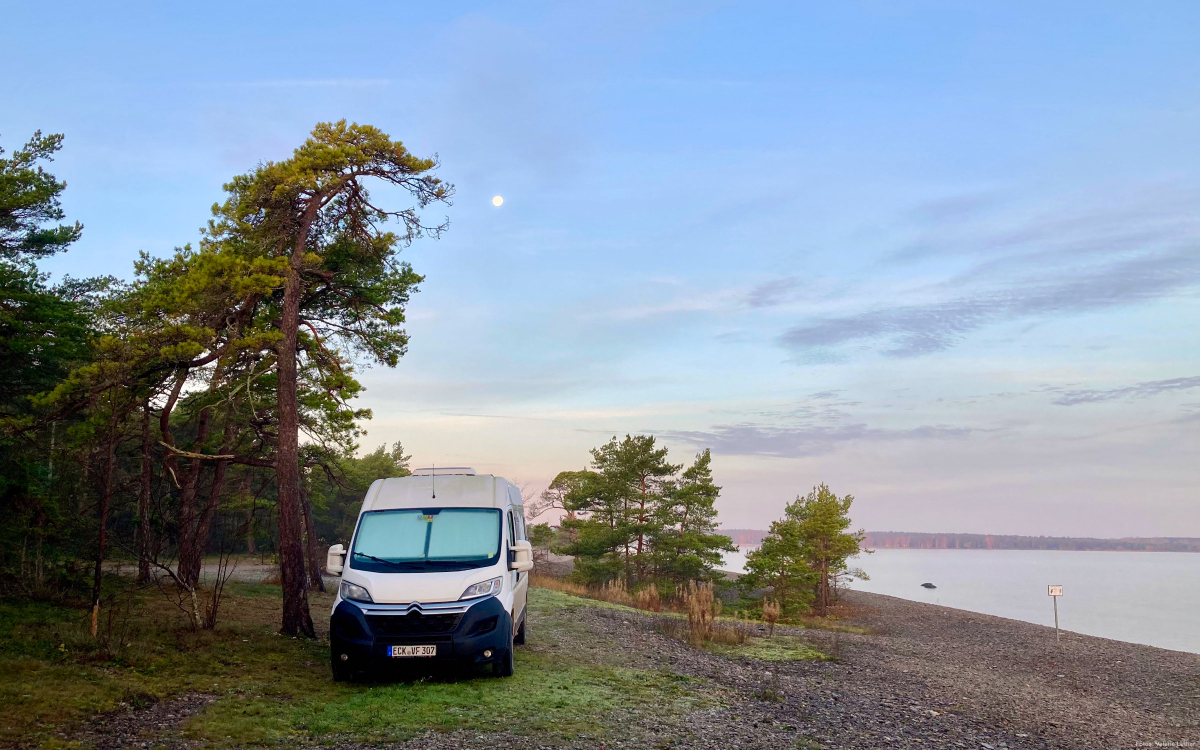
On our annual fall trip, where we always try to combine van life, nature experiences, hiking with our dogs, and windsurfing, we experienced a total bust from a windsurfing perspective. Until the very end… but more on that later.
It all started with the plan to go to Corsica a second time in November 2025 to extend the summer there and catch a few more good conditions with warm temperatures.
On our first trip to the “Île de Beauté,” this had worked out great, and we returned with some wonderful memories and photos (dailydose.de/travel-korsika-20220720.htm).

However, it turned out that our now 12-year-old dog, Mali, had to undergo major surgery a few weeks before the trip. Despite her good recovery, we didn’t want to subject her to excessively hot temperatures and strenuous hikes with significant elevation gain, because while Corsica is beautiful, it’s also quite mountainous and challenging for hiking. So our plans slowly shifted toward Brittany—hoping for a good combination of wind, waves, acceptable temperatures, and flat coastal hikes. Then, shortly before departure, however, the weather forecast for the Brest area showed nothing but lousy weather for 10 days—rain every day with temperatures barely higher than in Germany.
The spontaneous search for alternatives led us to southern Sweden. My windsurfer’s heart isn’t exactly leaping for joy, since it had to switch from the prospect of warm water and Mediterranean waves to Arctic temperatures and presumably mostly flat water, but the weather forecast was great: 10 days without rain, paired with a decent wind forecast. And so we actually considered southern Sweden to be the most sensible alternative overall. Plus, the region is quite accessible from our home near Kiel. So, off we went…
During our final research online and in our Sweden travel guides, the idea of heading to the island of Gotland instead of staying on the mainland basically came up right as we were leaving on Reformation Day (Friday). No sooner said than done—since the wind forecast for midweek promised 20–30 knots from the southwest, we took the ferry to Gotland on Sunday evening after a short stopover on the island of Öland. The crossing takes just 3 hours, and on Monday we spent the day checking out all the spots on the southern half of the island listed in the “Kite and Windsurfing Guide Europe” as suitable for SW winds, to be as prepared as possible for the coming wind. Then came the big, eagerly awaited day—only the conditions didn’t turn out as expected.
Early Tuesday morning, we hit the water at Holmhäller on the southern tip of Gotland. The wind was blowing side-onshore from the right and was pushing waves up to a meter toward the beach at times, which would have even invited some mini-backloops. But with my largest sail (5.2) and my freestyler, I only managed to really get into a glide occasionally and only with a wave push, so the fun was quite limited. After 90 minutes, I called it quits, somewhat frustrated, and we spent the rest of the day driving from the east side to the west side of the island and back again, hoping to find usable conditions somewhere after all. No luck. White caps were a rarity, and a second session simply wasn’t possible on either Tuesday or Wednesday. Pure frustration, especially since my expectations for the spots on Gotland were quite high. On good days, there’s supposed to be both really good flat water and several good wave spots. But with wind just below the “vomit threshold,” there was nothing to be done. Absolutely nothing.
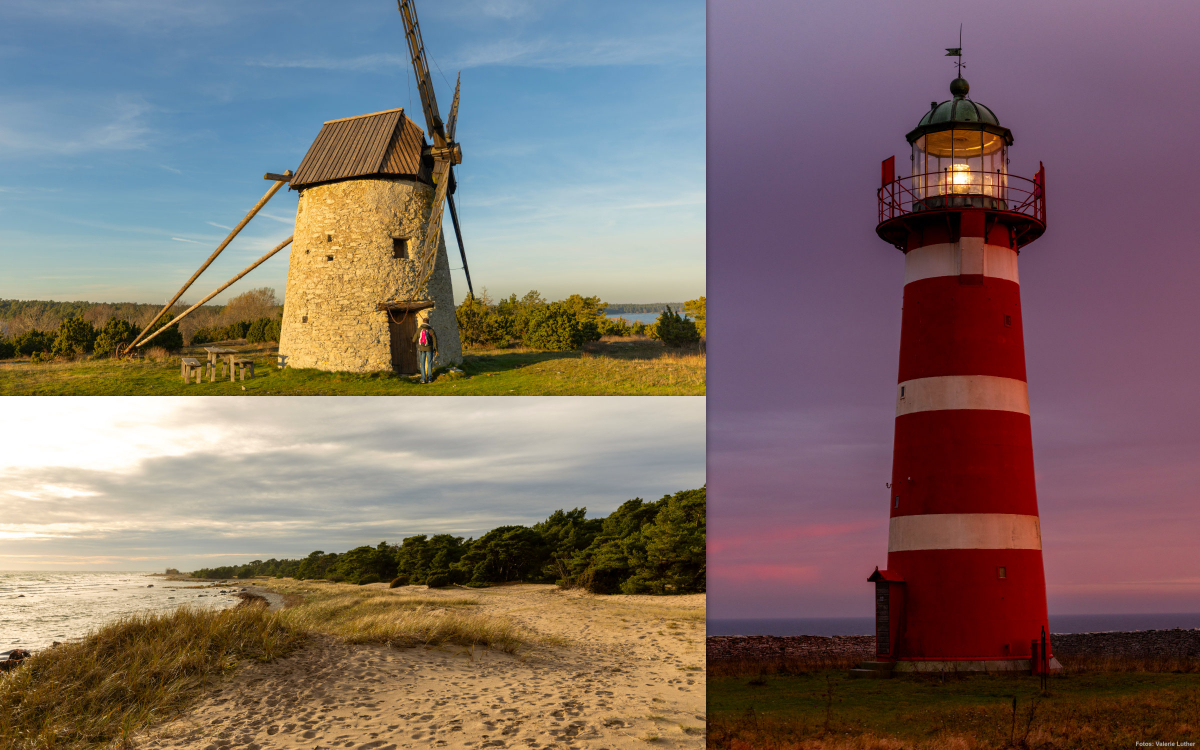
However, we were more than able to check off the rest of our travel goals, because luckily, Gotland is anything but boring. There are more than 100 nature reserves on the island and on the smaller neighboring island of Farö to the north, as well as over 150 km of designated and very varied hiking trails—with a total elevation gain of probably not much more than 150 meters. All in all. Perfect for our purposes. Due to the late season (first half of November), the island was virtually “tourist-free,” with the downside that many restaurants and campgrounds were closed, but with the major upside that we had many places all to ourselves and didn’t have to share the beauty of nature with others. Absolutely to our liking…
At the same time, with air temperatures between 8° and 12° C, it was still bearable or pleasantly cool—and for the first 10 days, not a single drop of rain actually fell. However, there was also a complete dead calm. Not exactly the weather one would expect on a November trip to an island in the middle of the Baltic Sea. We made the best of it—the windsurfing gear stayed dry for the next few days, but we hiked to as many spots as possible and stuck to our plan of getting in the water at least once a day.
For some time now, my wife has been determined to go swimming every day this winter. And she’s well on her way to sticking with it. Since, as a man, I don’t want to sit in the warm van like a wimp, I joined in. Fortunately, the water temperatures were roughly the same as the air temperatures (8°–10°C), so swimming in the many lakes or in the sea was actually still quite possible—but I have to say that I feel much more comfortable in the water with a wetsuit. On the other hand, ice bathing is an impressive experience and quite a challenge for oneself.
I’m sure Valerie will stick with it all winter long. I’m not so sure about myself. I’ll probably cheat at some point and only go into the cold Baltic Sea when it’s windy, wearing a thick wetsuit. We’ll see…
Gotland and Farö in particular are characterized by limestone landscapes. Especially along the west and north coasts, you’ll frequently come across so-called rauks—coastal sections where stone needles, shaped over millennia, rise skyward in impressive forms and up to 12 meters high. This is the perfect spot to search for fossils or take beautiful photos at sunset. Furthermore, the island is home to a very large population of sea eagles and golden eagles, so you can admire these majestic creatures time and again while hiking along the coast. With a bit of luck, you might also spot seals or even whales. The Hanseatic city of Visby also invites you to stroll through its truly beautiful old town, marvel at the many historic buildings and ruins, and relax in various cozy cafés and restaurants in the pedestrian zone (our tip: “Café Mirells,” https://mirells.se).

And this time, everything actually fell into place. Finally! Since we had already explored the entire island and checked out every beach described in the Kite and Windsurfing Guide, choosing the best spot was relatively easy. So on Wednesday afternoon, we found ourselves in Gnisvärd, on the west side of Gotland. The wind was blowing side-onshore from the left, and the first kiters were already out on the water. We quickly unpacked the 4.8 and the freestyler, and off we went. The bay was incredibly choppy, making freestyle moves really challenging. That was a bit disappointing. According to the spot guide, there was supposed to be a reef at the southern end of a small, flat island where a few waves break and invite you to jump.
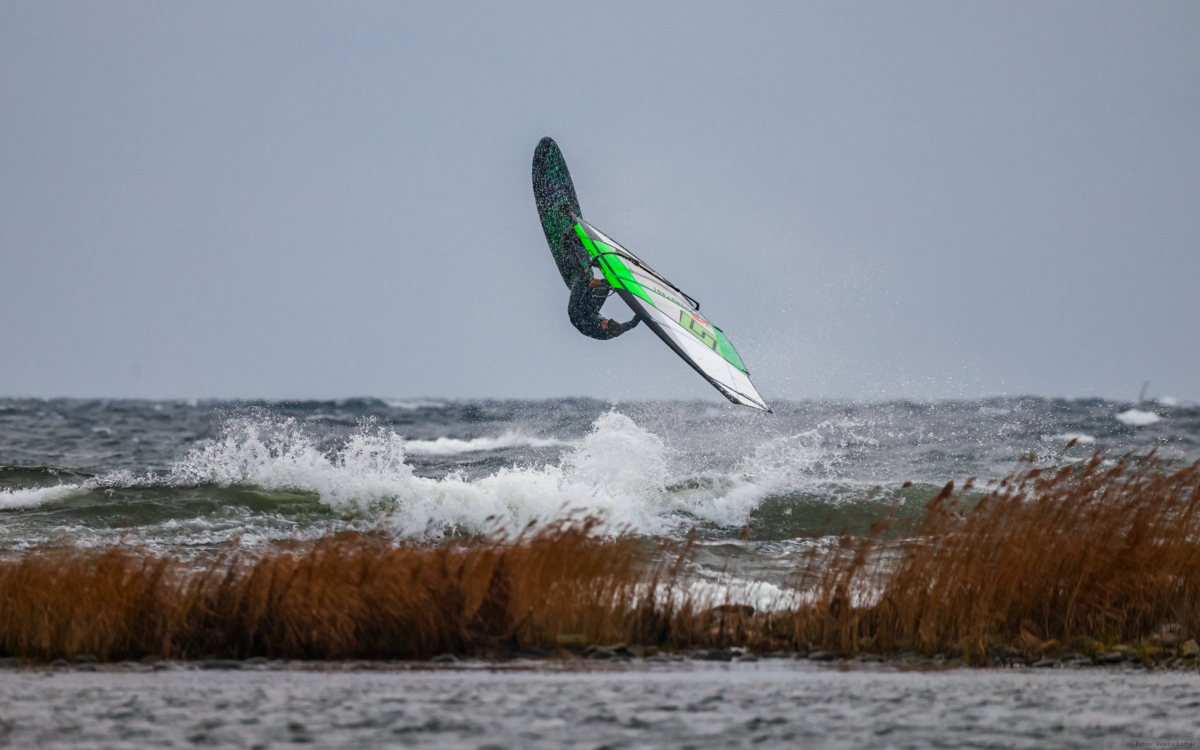
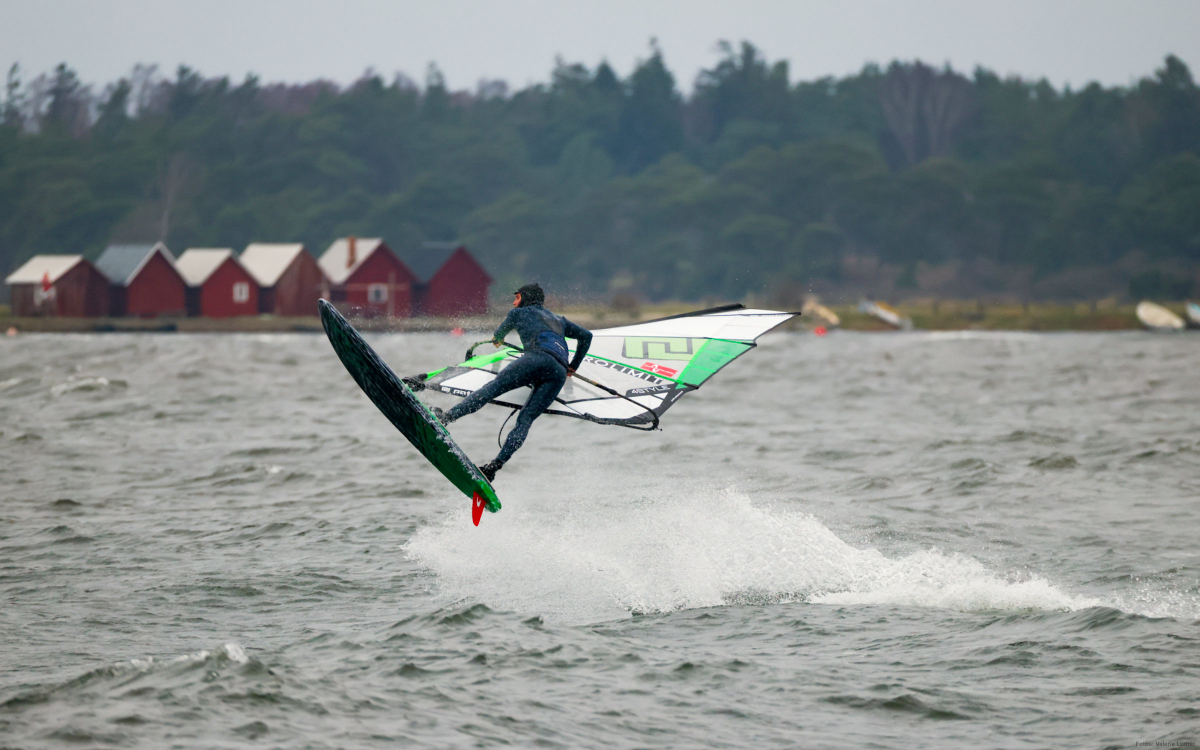
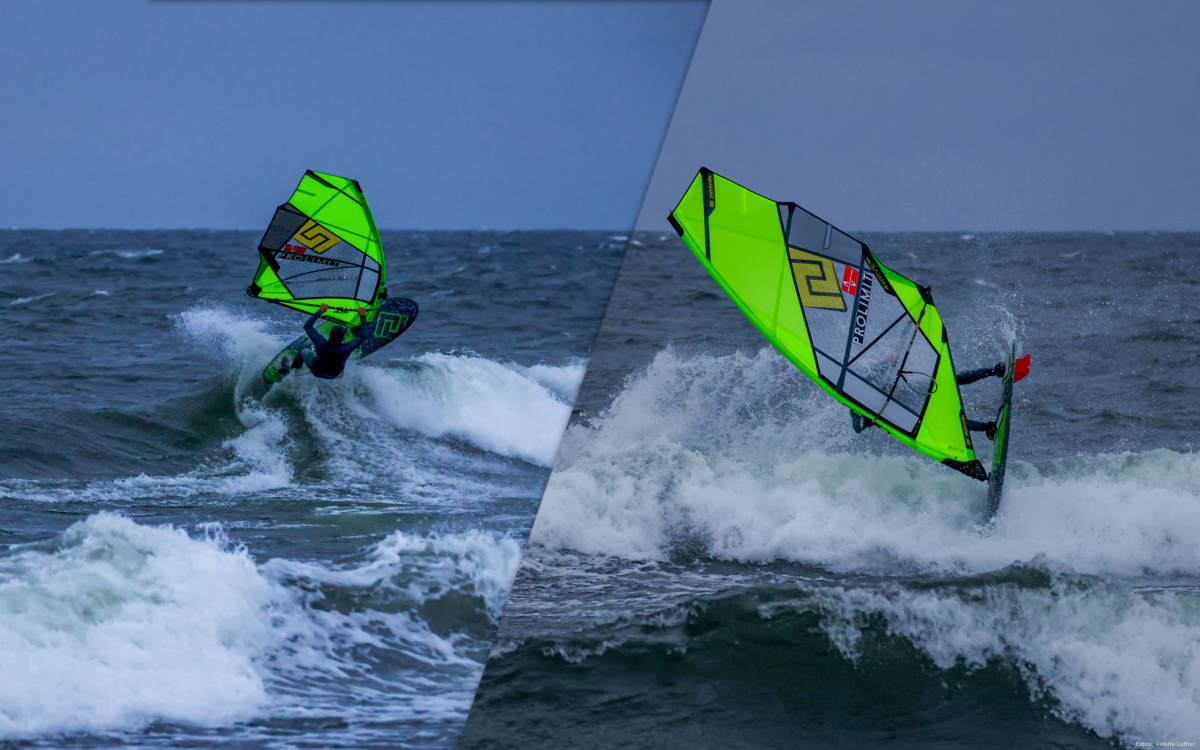
They gradually started showing up more and more, and after half an hour, proper ramps formed, inviting high backloops and shakas. With every jump, I cheered inside and enjoyed the airtime to the fullest. After about an hour, the wind kept picking up, so I decided to switch to smaller gear. While changing up, one of the kiters told me that most windsurfers would be surfing the waves further north at the pier given the wind direction. So I grabbed my waveboard and 4.4 and headed to the northern part of the bay—and found “Windsurfers Paradise.” Beautiful 1.5-meter waves were breaking at the perfect angle for jumping and riding toward the beach.
I racked up plenty of back and push loops and managed to land a few small aerials. The only downside: there were some pretty big rocks in the water near the shore, so you had to be careful. But if you gained some height after 1–2 turns, you could turn around in the harbor entrance without any trouble and get a running start for the next jumps. The conditions kept getting better, but the light kept fading, and after 2.5 hours I could no longer see the waves properly, so I had to call it a day—happy with what we’d found.

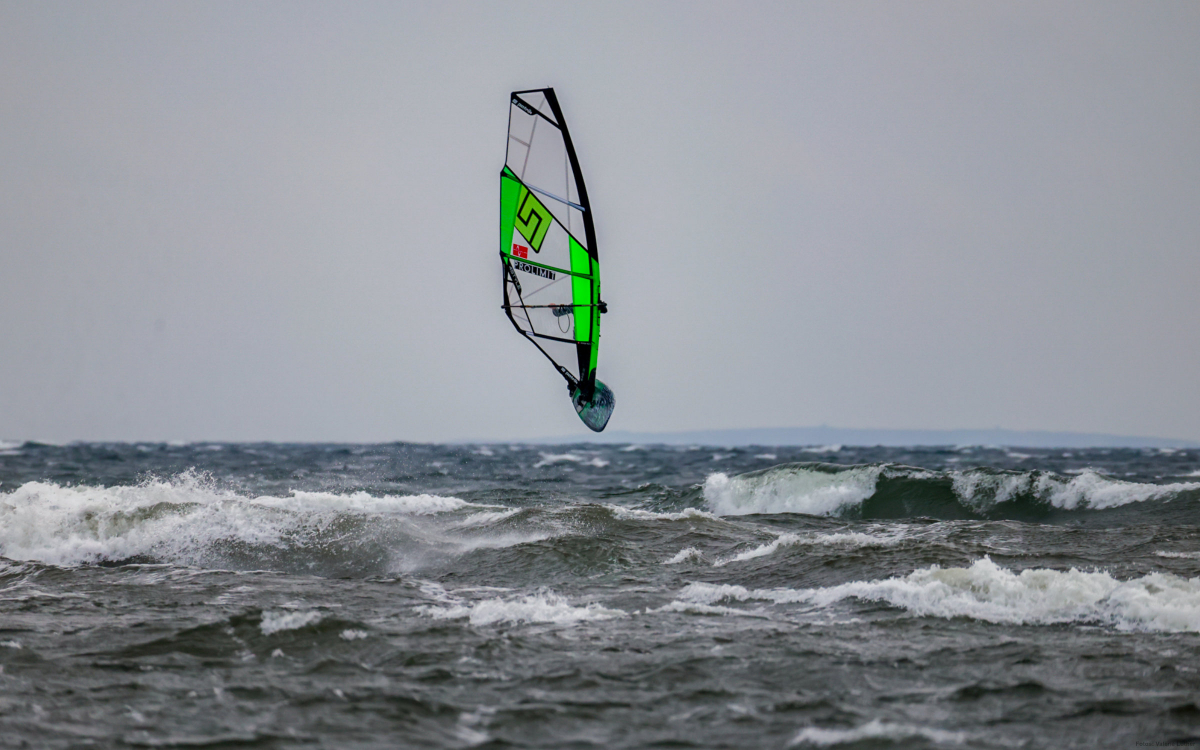
On Thursday morning, the wind had died down a bit and shifted further west, so Gnysvärd would have been very onshore. That’s why I opted for “Tjurudden,” a kite and freestyle spot. Here, the WSW wind blew over a flat headland, creating perfect, lab-like flat-water conditions downwind for practicing maneuvers. At the end of the headland, small mini-ramps practically invited us to jump shakas. With the 4.8-meter sail, I had perhaps the best freestyle session in recent years and was able to land a few maneuvers that I usually only manage once in a blue moon. I let loose for two hours before we slowly had to pack up and make our way to the ferry. What a wonderful ending!

But despite the two very satisfying sessions on our last two days on Gotland, my windsurfing conclusion for this trip is: “Mission: Failed.” Six hours of windsurfing in two weeks, having traveled 3,500 kilometers, isn’t a good statistic. So I still have a few scores to settle with the many spots on Faroe and Gotland, and I’ll definitely come back again—especially to experience the reef breaks on Faroe in action. But next time, I’ll likely go based on the forecast, so that after driving many kilometers through the night, I’ll be in the right place at the right time to catch epic conditions. And I’ll report back on that—hopefully with the conclusion: “Mission: Accomplished.”

All in all, the trip to Gotland and Farö was still great, and the decision to choose cool southern Sweden over the warm Mediterranean or Brittany turned out to be a good one after all. Because: There was hardly any wind in Corsica during those two weeks, and in Brittany, it must have been almost as wet on land as it was in the water. So, at least in terms of weather and windsurfing, we didn’t miss much there.
April 25, 2026 © DAILY DOSE | Text: Florian Luther | Fotos/Grafiken: Valerie Luther Fotografie | translation: DE